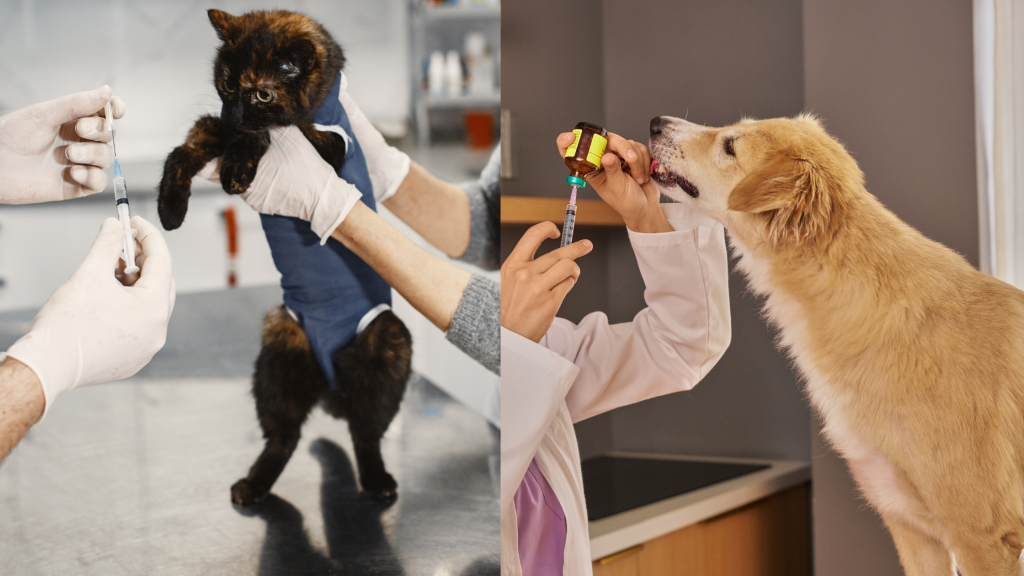
Pet Vaccination Guide Vaccinations are one of the most important parts of preventive pet care. They help protect dogs and cats from serious infectious diseases and can also reduce the risk of some diseases spreading to people. The right vaccine schedule depends on your pet’s age, health, lifestyle, location, and exposure risk.
Here’s a simple guide every pet owner should know.
1. Why Are Pet Vaccines Important?
Vaccines prepare your pet’s immune system to respond to specific diseases.
For dogs, core vaccines protect against serious diseases such as distemper, parvovirus, adenovirus, leptospirosis, and rabies.
For cats, core vaccines protect against diseases including feline herpesvirus, calicivirus, panleukopenia, and rabies. Feline leukemia virus (FeLV) is also considered core for kittens and young cats.
2. Puppies and Kittens Need Special Attention
Young pets need a carefully planned initial vaccination series because their immune protection changes as they grow.
Your veterinarian will determine the appropriate timing based on your pet’s age, health, vaccine type, and risk of exposure.
Avoid making your own vaccination schedule—your veterinarian should guide the plan.
3. Core vs. Lifestyle Vaccines
Not every pet needs exactly the same vaccines.
Core vaccines are recommended broadly because they protect against important diseases.
Lifestyle or non-core vaccines may be recommended depending on factors such as:
- Outdoor activities
- Boarding or daycare
- Travel
- Contact with other animals
- Local disease risks
- Exposure to wildlife
For example, dogs may need additional protection against Bordetella, Lyme disease, or canine influenza depending on their risk.
4. Keep Booster Vaccinations Up to Date
Vaccination isn’t always a one-time event. Some vaccines require boosters at specific intervals, while others may provide protection for longer periods.
There isn’t one universal annual schedule for every dog or cat. Your veterinarian should determine when your pet needs each vaccine based on current guidelines, vaccine type, and individual risk.
Keep a record of every vaccination so you don’t miss an important booster.
5. Watch Your Pet After Vaccination
Most pets do well after vaccination, but mild temporary effects can occur.
Your pet may be slightly tired or have mild soreness where the vaccine was given.
Contact your veterinarian if you notice a concerning or severe reaction, such as difficulty breathing, facial swelling, collapse, or persistent vomiting.
Key Takeaways
- Vaccines help protect pets from serious infectious diseases.
- Puppies and kittens need carefully planned initial vaccination schedules.
- Core vaccines are recommended broadly, while other vaccines depend on lifestyle and risk.
- Booster timing varies between vaccines and individual pets.
- Your veterinarian should create and update your pet’s vaccination plan.
FAQs
Do indoor pets need vaccinations?
Yes. Indoor pets can still be exposed to infectious diseases, and vaccination recommendations depend on the individual pet’s risk and local requirements.
Can my pet get vaccinated if they are sick?
Vaccination may need to be postponed if a pet is actively ill. Your veterinarian should examine your pet and decide whether vaccination is appropriate.
How often should my pet get vaccinated?
It depends on the vaccine, your pet’s age and health, lifestyle, and local requirements. Your veterinarian can create an appropriate schedule.
Summary
Keeping your pet’s vaccinations up to date is an important part of responsible pet ownership. Start with the recommended core vaccines, add lifestyle-based protection when appropriate, and keep accurate vaccination records. Most importantly, work with your veterinarian to create a vaccination plan designed specifically for your pet.
Discover more from Parhley
Subscribe to get the latest posts sent to your email.